Blog

It takes a village to raise a child

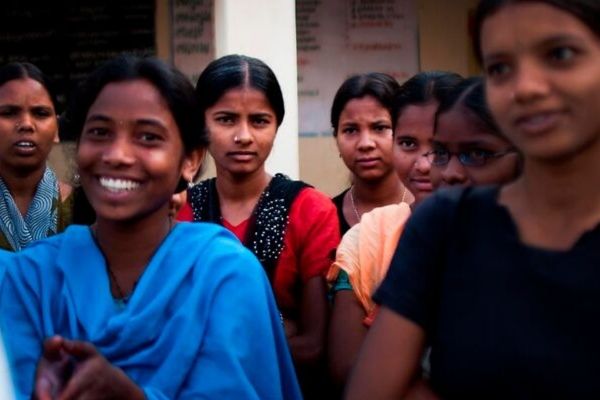
When Vaishnavi lost her parents at the age of 12 to ill health, she and her brother were directionless and confused. They didn’t know who to go to and what to do. Luckily for them, their paternal aunt and uncle took them in.
But things didn’t get easier for them there. Their aunt’s family sustained themselves as agricultural labourers who earned just Rs.4000-6000 a month. As a family of four with two additional mouths to feed now, the family began moving from their village in Chittoor, AP to Bangalore and back in search of work. In order to make things easier, the family enrolled their two children, Vaishnavi and her brother in a gurukul in Chittoor. But in 6 months, the family was uprooted again and taken to Bangalore.

Our community organizer from People’s Organization for Rural Development (PORD) noticed that the children weren’t in school anymore and began to get concerned that their guardians might have taken them to Bangalore to engage in child labour. The organizer immediately informed the Panchayat about this who pressurized the family to return to Chittoor. After returning early this year, they were re-enrolled in the government school in their village.
But two months later, in April, Vaishnavi dropped out of school again. The children’s collective and community based organizations in the village realized that the family was going to get Vaishnavi married to lessen the burden on the family.
Experienced in situations like this, our project partner made multiple visits to the family during which they realized that the family felt that these two children were a burden to them and they could only afford to educate one child. Since Vaishnavi was of marriageable age according to them, they decided that Vaishnavi’s brother could continue going to school. They felt that this would not only help them but also ensure that she was protected as she had to travel 6 kilometers to her current school and they were worried about harassment.
Realizing that this was the result of multiple issues; primarily financial, the local authorities, government organizations and community including caste leaders, teachers, panchayat and children’s collective were called upon by PORD. After a lot of deliberation on the best course of action, the Panchayat offered the family an SC corporation loan (a subsidized loan granted at the panchayath level for extremely poor SC communities to enhance their livelihood).
Currently Vaishnavi’s guardians are a little less burdened and have agreed to send her to a gurukul which will ensure her education till 10th grade.
PORD has actively worked to sensitize the community regarding child marriage over the years. Over the last two years, only 2 instances of child marriage were identified and averted by the community. The convergence of all the stakeholders like the Panchayat, teachers, and community has protected children from multiple issues like child labor, child marriage and lack of education.
As rightly said, it does take a village to raise a child.
Read more

An abstract of being at a safer hut

Nature is bountiful – and Odisha as a state, has received so much from nature. If one travels across the state, the changing weather and landscape is palpable. The other change that can be noticed is the change in people – their living conditions, economic stability and socio-political scenarios vary quite drastically.

Mayurbhanj is one of the largest districts in Odisha and is famous for its places of interests, mining and agricultural options and lush forest areas. However, in spite of all the opportunities, Mayurbhanj has been featured in the list of the country’s 250 most backward districts (Ministry of Panchayati Raj, 2006).

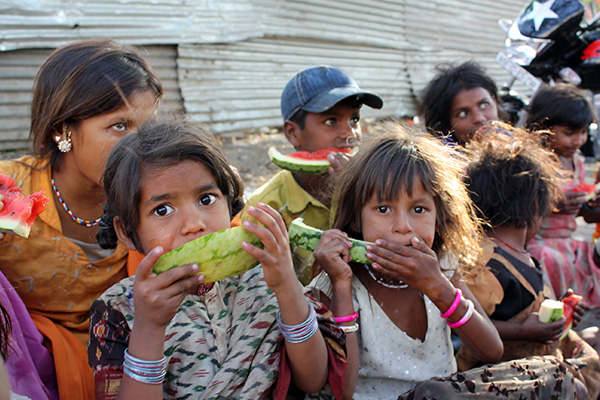
In this district lies Dilleswar village of Ranipokhari Panchayat and Kaptipada block. Rini Sahu (name changed), the 15 month old daughter of Milan and Kaveri Sahu, lives here. Rini has 5 siblings. The Sahu family are marginal farmers and depend on daily wages to fend for the family.

In the month of July’17, Sah Bhagitha Mahila Mandal supported partner alliance Voice of Child Rights in Odisha (VCRO) and launched a child support campaign to fight malnutrition across 5 districts of Odisha. When the intervention team reached Dilleswar village, they started monitoring the children and noticed that Rini weighed only 6 kilos. Not only that, she had also been suffering from malaria. Without wasting a day, the intervener, along with Anganwari workers consulted with Rini’s parents and informed them about Rini’s undernourished condition and advised that she should be taken to NRC urgently. At first, Milan, Rini’s father, was hesitant as moving Rini to NRC will mean that her mother would also need to be there with her. This would severely affect the family’s daily wage. He also stated that he couldn’t even afford a proper transportation cost. The intervention team not only continued the consultation but also arranged for a car so that Rini and her mother Kaveri can travel to NRC.

Rini was taken to NRC and stayed there for more than two weeks. She regained her health gradually and returned home. The intervention team further consulted the Sahu family so that they grow their own kitchen garden and feed proper meals to their family. Seeds and saplings were distributed in the village.

Today, if one visits the Sahu family, they can notice a healthy garden of papaya, banana, greens and other vegetables. Rini is more than 8 kilos now and plays happily with her brothers and sisters. She also owns a teddy bear, which remains by her side always.

“We did not understand how grave the situation was. We almost lost her and the solution was not so difficult, yet we struggled. Now I make sure my kids have proper meals every day,” says a teary-eyed Kaveri.

Sah Bhagitha Mahila Mandal and its partners, with their child welfare efforts, could save Rini from the perils of malnutrition. However, unfortunately, the overall condition of poor children is quite bleak in Odisha, with hundreds of Rinis still suffering.*

Read more